Sunday, 13 May 2012

Summer Rolls Recipe/ An Introduction To Vietnamese Food - Good Food Channel

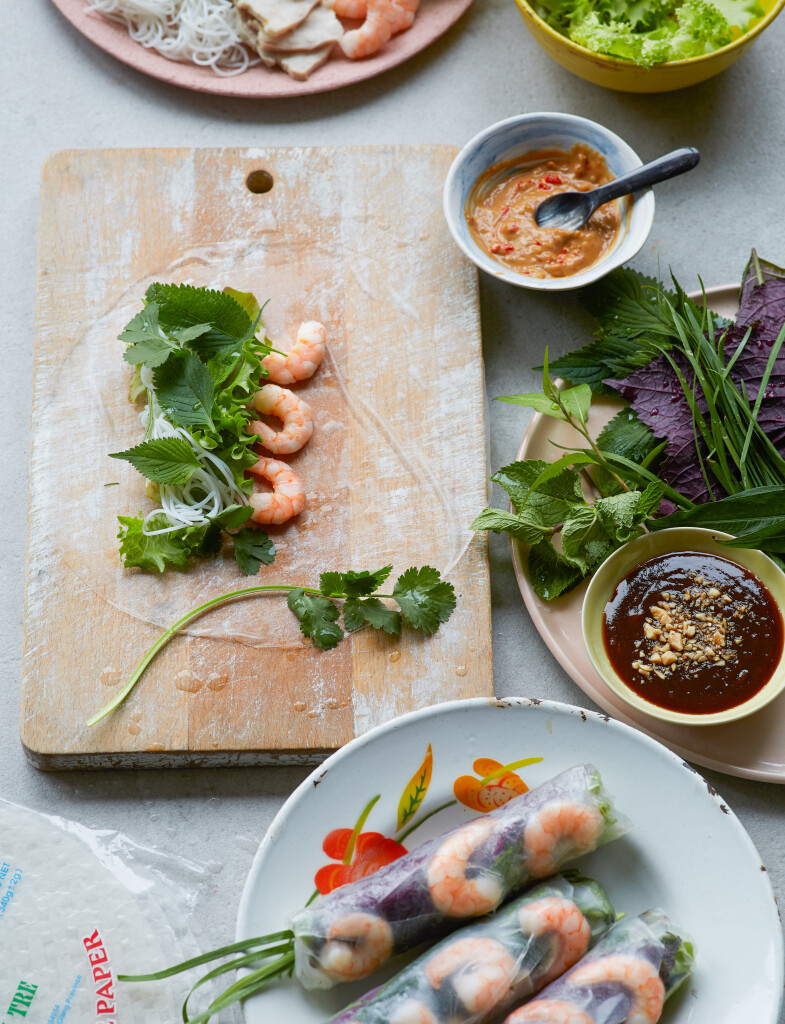
I am currently writing a weekly/ fortnightly series about Vietnamese food on The Good Food Channel. You can find my recipe for Saigon summer rolls and an introduction to Vietnamese cooking on The Good Food Channel website.

Introduction To Vietnamese Cooking
Summer rolls
About me

Thursday, 3 May 2012

Basic Vietnamese Herbs In My Kitchen (& Chilli)

The Vietnamese use herbs in abundance. They don't just sprinkle a little on here and there, they use it like salad leaves and they love their herbs. The general term for herbs is "rau thơm" meaning, fragrant leaves. Full of perfume, flavour and health benefits herbs are used in almost every savoury dish I can think of. Coriander, sweet basil and mint are the most common herbs you can buy, so if in doubt or you can't find the required herbs use those.

Saw Tooth - Ngò Gai
Tastes like intensive coriander. Commonly used as a garnish in phở or with beef salad. If you can not get hold of this, use coriander.
Basil - Húng Quế
Used as a garnish in noodle soups like phở and bún bò Huế. The aniseed aroma and flavour is liquorice like and translate in Vietnamese as cinnamon basil. The leaves originating from Thailand and Vietnam oxidizes very quickly but are more fragrant and contains more flavours than others.
Betel Leaves - (Lá Lốt) 
Not to be confused with betel nut chews,  lá lốt has a pungent, minty, peppery taste and smells rather like cinnamon. These heart shaped leaves are usually used as wraps for garlicky beef recipes or in salads. substitute with shiso/ perilla leaves or vine leaves

Shiso/ Perilla (Tía Tô)
Earthy and bold yet very pleasant in peppery, cinnamon and fennel flavours. Often purple on one side and green on the other, it resembles stinging nettles. Also known as Japanese shiso or wild sesame. It is rich in omega-3 fatty acids, vitamin A & C, containing minerals calcium, iron and potassium. It is commonly used in China as medicine.  Tía Tô is used in salads and summer rolls and cold bún noodle dishes. Subsititute with Japanese shiso or mint.
Cockscomb Mint - (Kinh Giới)
Delicate Kinh Giới  resembles minty lemon balm and used in summer rolls, salads, fish and chicken dishes as well as garnishes in noodle soup such as bún bò Huế. This is great in a tea, just seep in boiling water for a refreshing and soothing drink in the sun. Use lemon balm if you can not find cockcomb - also known as Vietnamese lemon balm.
Hot Mint - (Rau Răm)
The citrus coriander odour is reminiscent but it is not related to the mint family. There is a spicy and peppery after taste that lingers. Also known as Vietnamese coriander or Vietnamese mint. It is commonly eaten fresh and raw in salads, gỏi cuốn, as well as in some soups such as canh chua and bún thang, and stews, such as fish kho tộ.
Garlic Chives - ( He)
Also known as Chinese chives. Tastes very garlicky and used as a seasoning in soups like won ton, salad and summer rolls.
Coriander - (Ngò)
Fragrant, diverse and wonderful! Coriander is used liberally as a garnish, torn or chopped over salads or almost any dish! Readily available in supermarkets, corner shops.  A lot of the flavour is in the stalk.
Growing Your Own Tip:
You can perhaps buy seeds to grow your own herbs but I found hot mint in Columbia Flower market. It grew easily and in abundance in the summer. However, if you buy bunches of hot mint, basil, perilla and cockscomb in the shops, look out for a bunch with the thickest stalks. Once you have used the leaves, keep the stem in a glass of water (make sure its a glass so that you can see if you need to refill) you will see roots appear after 5 - 7 days. Remove from water and plant into a pot of soil and grow in a sunny spot. Hot mint, cockscomb and perilla grow very easily. You'll need very green fingers for basil but it does work.
Fresh herbs are imported in London on Thursday which is the best day to buy them. Always seek a bunch that is not bruised or too damp.

You can store herbs, dry from moisture in an air tight bag in the fridge. Apart from coriander most can last for up to 10 days. I've never tried freezing them.


Check out Luke Nguyen's guide to herbs here it also has medicinal uses.
Here is Andrea Nguyen's guide.

I will post another selection of herbs and spices. As for chillis, they are hot - so don't touch them and rub your eyes : )

Monday, 30 April 2012

Avocado & Coconut Sorbet

In South East Asia, avocados are usually consumed sweetly. As it has high (mostly monounsaturated ) fat content, it is an important staple where fatty foods such as diary, fatty meat and fish are limited. At home, my favourite dessert is a ripened avocado smashed with a fork and mixed with a generous sprinkling of sugar or better - condensed milk or honey. It took me a while to venture into guacamole or to have it in a tricolore salad because I couldn't face avocado as a savoury food, similar to how most people I know can not accept that this fruit can be eaten sweet until they try my avocado and condensed milk dessert!

In Vietnam, there are plenty of street vendors selling fruit juices and smoothies day and night (especially at night). One of the most popular smoothies is avocado with sugar or milk or with other fruits juices that pair well like coconut or papaya.

Avocados are very good for you, my mum keeps reminding me. She is often in supply of avocados and makes sure we eat them as she claims all sorts of health benefits such as lowering cholesterol and being high in vitamins.

Thanks to Cuisinart for sending me a mini chopper/ blender and an ice cream maker, I thought I would treat my mum and turn her beloved avocados into a sorbet. She had never had it with coconut juice before and really wanted to try it because I kept going on about the memorable shake I had in Hong Kong and Vietnam - Avocado and Coconut, buttery yet entirely refreshing and irresistible!

Ingredients - serves 4-6
2 ripened avocado
200ml coconut juice
3tbs condensed milk

Method
Cut avocado in half, scope out avocado, leaving the skin and stone and blend all the ingredients together. If you do not have a blender, place in a bowl and mash with a potato masher or fork til it is smooth.

Churn in a Cuisinart ice cream maker for 30 mins. Time will vary according to different ice cream makers. If you do not have an icecream maker, blend it, freeze it, then blend again. Repeat at least twice.

You can simply put these ingredients into a blender (with or without ice) and serve as a shake/ smoothie. Its one of the best drinks! My mum is very happy.

Hix At The Albemarle

For me, English food has always been about fish fingers, baked beans, mash and sausages. The stuff of legendary school dinners - which were extremely exotic to a seven year old child who always had to eat Vietnamese food, like bo kho or fried fish at home! I loved school dinners and by any means possible, I'd put my hands up for a trip to the canteen just for an unbeatable lunch! If I crave the simplicity of "English" food, there is always a box of fish fingers in the freezer and a tin of baked beans in the cupboard.

I was therefore delighted to be invited to eat at Hix At The Albemarle, at Browns Hotel in Mayfair, to eat real English food. Mark Hix is an award winning, celebrated (celebrity) chef, restauranteur and author of many cook books including, British Seasonal Food and British Regional Food, reflecting his interest in traditional, local and sustainable produce. He also writes a regular column on food for The Independent newspaper.
We were welcomed with champagne and a really nice bottle of wine (sorry - I forgot what they were).
Indeed it was a "proper" place to eat "proper" food whilst being very "proper."

The menu was extensive and it took us a while to digest around a round table with very formal waiters waiting for us. The dinning room at Browns is very dignified. It was a Tuesday night, so the place was rather empty and it was very quiet. The room juxtaposed with contemporary British art, including a neon light piece by Tracey Emin but there wasn't any background music which meant we felt like we had to be very grown up and behave ourselves (we do usually) and be very quiet.

As we decided and received our food, it was lovely; cooked very well and was very appetizing. I had the quail for starter and then pan fried lemon sole with mash (got to have mash). The Skinny Bib chose in season asparagus with breaded eggs and scallops, while Hungry In London had an asparagus salad and then the cod. We all shared the apple crumble with custard and a plate of cheese (which were stalked and squashed together quite unusually) and biscuits and a fine bottle of dessert wine.
We met a happy, giggly old English gentleman outside Browns after dinner who said he'd been eating there since 1982! He lives in Jersey and visits especially for the food - because it is "reliable English food." And I can imagine he'd be the grandfather of a lover whom I'd had to meet for dinner and charm him with my orient origins and be a little greedy over the vanilla custard. 

Thank you to The Communications Store who invited us. We did not pay for this lovely meal.


Hix At The Albemarle
Browns Hotel 
33 Albemarle Street
London, W1S 4BP
www.thealbemarlerestaurant.com/

For a full review of the food/ restaurant visit Hungry In London here 

Tuesday, 24 April 2012

Bánh Patê Sô (Pate Chaud)

Hot puff pastry pies with chicken, peas and mushrooms
You can put anything in these pies. My mother has been making them since she discovered ready made puff pastry from the supermarket! Who has time to make them from scratch these days when they are just as good! I always thought they were Vietnamese until a recent after thought made me realise that they are actually French! The Vietnamese enjoy pastry snacks like these all the time.

Bakeries in Saigon are busting with people queuing on their Hondas every day and night for hot savoury cakes! Who can resist!

 
Ingredients – Makes 6
1 pack ready made puff pastry
100g chicken breast
3 cloves garlic
2 brown chestnut mushrooms
50g garden peas 1 tsp pork seasoning
1 tsp sugar
1⁄2 tsp black pepper
2 tbs butter
1 tbs tapioca starch
5 tbs water
1 egg yolk


Method
Finely dice the garlic. Cut the mushrooms into small chunks. Slice the chicken breast into small 1cm cubes or quickly pulse in a blender. Drizzle cooking oil into a hot pan, add the butter, garlic, chicken, mushrooms, peas and season with sugar, pepper and pork seasoning. Fry until golden.

In a separate bowl, mix the tapioca starch and water together then pour the mixture into the pan with the rest of the ingredients. This thickens and combines everything together. Cook for a further minute and leave to rest.

Preheat the oven to 180oC. When the mixture has cooled down. Roll out a sheet of puff pastry. Use a 6cm round cutter or a thin lip cup and cut out 12 circles from the pastry. Fill each sheet with a generous table spoonful of filling and close it up by placing another sheet on top. Place them on a greased baking tray. Use a fork to press around the edges and brush the pastry with the egg yolk which will give them a nice golden colour. Bake for 35 minutes or until golden and serve immediately.

Thursday, 19 April 2012

Bò Kho- Vietnamese Beef Stew

The ultimate comfort food, usually served for breakfast in Vietnam as it is spicy and sensual with star anise, cumin, cloves and chilli to wake any senses.  Bò Kho is usually eaten with a fresh baguette, the sauce is perfect for dipping and scooping or it can also be served over cold flat rice noodles (hủ tiếu) or vermicelli (bún) with beansprouts, plenty of fresh herbs and the essential squeeze of lime for a perfect fresh zingy balance. 

Vietnamese food is brilliant at being light and fresh. Despite the richness of the stew, it is contrasted and balanced with fresh, crunchy ingredients - making every morsel tasty and diverse!

This beef stew must have been inspired by the French boeuf bourguignon! as it is slowly cooked with all its ingredients humming away. Water or coconut juice is usually used but I decided to add cider which seemed to work perfectly. If you were going to use coconut juice, then add less sugar as the juice is usually sweet already.
Ingredients - serves 4

Spices
1 tsp annatto seeds
2 tsp dried crushed chilli
1 tsp ground cumin
1 tsp paprika
1/2 tsp ground clove
12 star anise
1 bay leaf

450g braising beef, beef tendons or rib cut into cubes or roughly bite sized
2 cloves garlic, sliced
1 onion, chopped roughly
10g knob of ginger
200g chunks of carrots
200g chunks of potatoes
2 stalks lemongrass, finely chopped
400ml cider (or coconut juice, but reduce sugar)
100ml chicken/ beef stock
2 tsp salt
2 tsp sugar
3 tbs premium fish sauce

Garnishes (optional)
beansprouts
thai basil
mint
coriander
saw tooth
4 lime wedges

Accompaniment - optional
70g dry rice noodles per person or
Fresh warm baguette (even buttered toast works)

Method

In a hot pot with some oil, add the anatto seeds. The red-ish colour will release after a couple of minutes. Pour the oil into a bowl and discard the seeds.

In the same pot, sweat the onion then turn to high heat and add the beef to brown off on all sides. You may need to do this several times, the meat will not brown if there isn't enough space. Use a bowl to place the portion you have already browned off then bring back together into the pot.

Once all the meat is browned, mix the spices in to the meat: cumin, chilli, paprika and clove then pour in the cider and stock, adding a bay leaf, the garlic, star anise, ginger, lemongrass and the annatto oil.

Cook with the lid on for about 15 minutes then add the potatoes and carrots and season with salt, fish sauce and sugar. Cook for a further 30 minutes on medium/ low heat with the lid on. Depending on the cut of the beef, cooking time may vary. Make sure the beef is tender but still has a bite to it.

Adjust the taste to your palette. Serve hot with warm baguette or over rice noodles and garnishes.

Friday, 13 April 2012

Recipe: How To Make A Bánh Mì


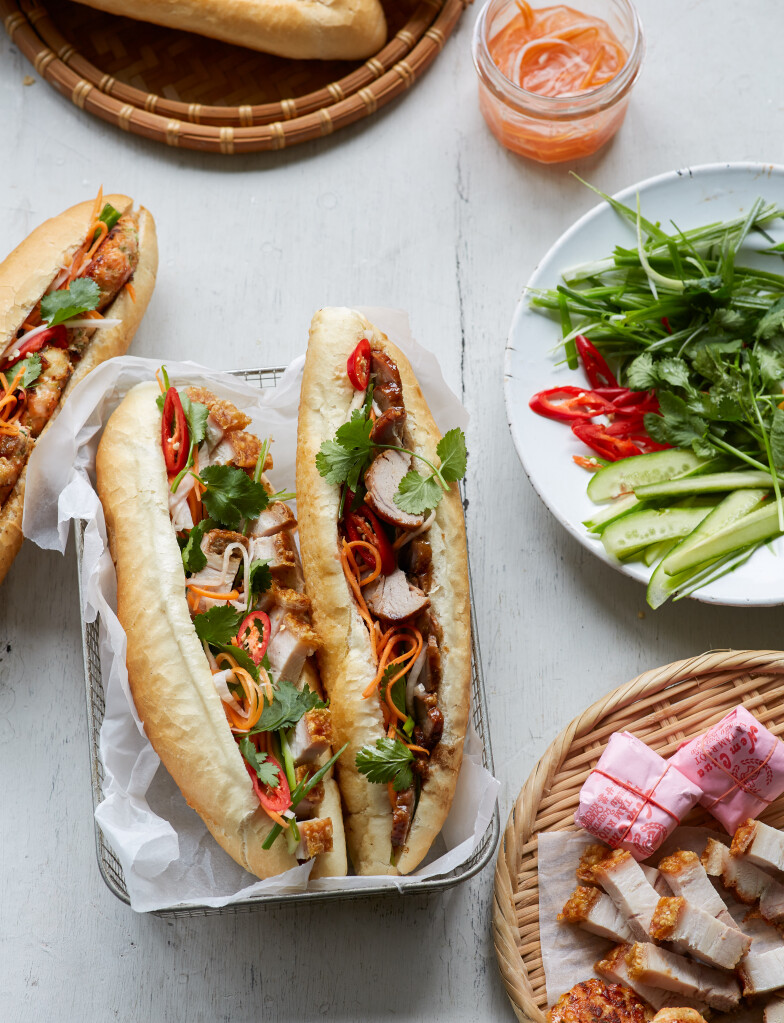
'Bánh mì' is a Vietnamese baguette, it was inspired by the French and has become a staple in Vietnamese cuisine. A typical banh mi contains some of the most flavoursome combination of ingredients. The perfect equilibrium of sweet and sour crunchy carrot and daikon, a salty smooth velvety smear of pate with umani BBQ pork cuts and cooling fresh coriander and cucumber among a spicy chilli sauce makes this a quintessential bite.

The Vietnamese baguette has a light crunchy exterior and is delicately fluffy inside. Some describe it as biting into crispy air! As with most of Vietnamese cuisine, the lightness of ingredients is vital to one's enjoyment as no one relishes in being weighed down. The dough in the centre of the baguette is usually removed so that all that you bite into is the lovely light crisp crust to reach the sensational filling.

If you cannot get a Vietnamese baguette, use a regular French baguette - the lightest kind you can find.

Ingredients to buy
Vietnamese baguette or regular freshly baked baguette
cha lua - Vietnamese ham – slice thinly
pork or chicken liver pate (or make)
coriander
cucumber - cut into10cm lengthways
butter or Laughing Cow cheese
spring onions - thinly slice lengthways
Maggi seasoning
chilli
Sriracha hot chilli sauce (optional)

Ingredients to make
carrot and daikon pickle
2 carrots
1/2 daikon
5tbs cider vinegar
5bs sugar

Julienne the carrots and daikon (aka mooli) and pickle in cider vinegar and sugar for 15 mins. Then drain and wring with your hands to dry.

BBQ pork belly - makes one -1 foot baguette
100g pork belly
1 tbc char sui ready made powder
2 cloves garlic
1/2 red onion or shallot
1tsp pork seasoning
1tsp Maggi seasoning (or soy sauce)
1 tsp sugar
150ml coconut juice

Method
Finely chop the garlic and onion and mix together with the char sui powder, pork seasoning, soy sauce and sugar and marinate the piece of pork belly for about 20 mins.

With cooking oil in a hot pan, fry the pork belly until golden brown then pour in the coconut juice, turn the heat down and cook for a further 15 mins with the lid on, turning occasionally. Rest. Once cooled, slice into thin pieces.

Making a Bánh mì
Slit the baguette lengthwise and pull out the filling. (This could be used for breadcrumbs). Spread with butter or Laughing Cow cheese and a smear of pate. Layer the meat, cucumber, pickle, chilli, coriander, spring onions and squirt over a few drops of Maggi seasoning. Close the sandwich and cut if its too long. Enjoy!
Another option for the meat filling in bánh mì:

Chargrilled Pork with Lemongrass
Ingredients
100g pork (loin, shoulder or belly)
1 stalk lemongrass
1 clove garlic
1 shallot
1 tsp Maggi seasoning (or soy sauce)
1 tsp pork seasoning
1 tsp sugar

Method
Preheat oven to 220.
Finely chop the lemongrass, garlic and shallots and marinate with soy sauce, sugar and pork seasoning for 10 minutes. Then bake in a tray for 15 mins - or until golden. Slice and serve warm in baguettes. Use the jus/ gravy to season your sandwich!

Wednesday, 11 April 2012

The Art Of Fine Dinning - Masterclass

Table Lumiere
I was about 21 years old when I first set foot in a fine dinning restaurant in mid Europe with The Hungarian Count, his mother and his mother's mother. He held my hand. He stood tall and protective over me, his very own Vietnamese Eliza Doolittle, being slightly worried that I may slip up. He had already primed me like in Pretty Woman, which fork to use… and I pretended that I had also grown up with a silver spoon in my mouth and replicated my hosts' dinning behaviour year after year until it was perfectly natural for me to be in a fine dinning dinning room.

I discovered that it didn't have to be as stiff as it is portrayed to be. Certainly, no one should be roaring with pints of beers in salutation but one can equally have a good time, just a different sort of time. People did put their elbows on tables and cause a bit of noise and laughter. It was all ok, even if you dropped something or the snail flies from your plate, like "slippery little suckers".

I love going to a good restaurant, the idea of being in a Michelin starred restaurant gives me a big sense of excitement and happiness where butterflies and stars explode in my stomach. As a blogger, I am lucky to be invited to a few but it remains a treat that I don't want to take for granted.  I love dinning Michelin cuisine with a good friend and/or someone you love because the experience of being treated (usually) so well and to eat delicious food one would not normally be capable of creating is something to be savoured.
I had the opportunity to go on a press event and have a masterclass on The Art Of Fine Dinning that is held at Alain Ducasse At The Dorchester, who holds three Michelin stars. There, I got a prescient insight to how the restaurant is run on a daily basis from Nicolas Defremont, the Restaurant Director whose been with Ducasse for years - (he went to Ramsay but came back). He shared the key principles and exclusive trade secrets behind developing the perfect contemporary fine dining experience.
When you have to pay top dollar to dine at Alain Du Casse, you would expect to have perfect service and setting. They iron their table clothes three times! The table settings are meticulously placed and checked. Each piece of crockery and cutlery is thoroughly polished by hand. They even have a station in the kitchen dedicated to this. Then there is the "one finger rule" of placing your wares on the table, everything being one finger away from another so that every setting can easily be replicated the same way and placed symmetrically. The little details makes a big difference says, Nicholas, especially when one table's ware, the Table Lumiere, costs £200,000.


The secret to ironing (which I am terrible at) is to iron the table cloth on an ironing board then spray the cloth with water and iron on the actual table the second time. Finish off any creases on the third time before setting table.

Having a warm water spray with half vinegar aids polishing glass and tableware including cutlery when the dishwasher leaves residue and wear gloves so to not leave your own finger prints on polished wares.

Here are the rest of the tips - 12 Service Commandments from the masterclass.


Setting the table to the perfect standard of fine dinning was harder than expected, even when I thought it was perfect, Nicolas came and re-adjusted everything! haha!
The best thing about the class was the wine tasting! Of course! We met Head Sommelier Vincent Pastorello who demonstrated some top Sommelier's tips like which glass to pour which wine into. I had no idea it made such a difference how a glass can change the taste of a wine when we compared it.

Big glasses do not mean better tasting wine because it looses too much oxygen and of course, at which temperature it should be served at. Serving a chilled bottle of wine straight from the fridge doesn't necessary do the wine justice either and some should be taken out an hour before serving to get the best taste.

Here is a guide:

Included, "Nature" By Alain Ducasse

The Art of Fine Dining masterclass costs £120 per person at The Dorchester.
www.alainducasse-dorchester.com

My trip was courtesy of The Communications Store.

Tuesday, 10 April 2012

Food Revolution Day

Join me for a special Vietnamese cooking class on Sunday 20th May at Fifteen for Jamie Oliver's Food Revolution Day where I will be passing on some of my Vietnamese food knowledge so that we can all make it and enjoy it at home. Book online and donate here

Friday, 6 April 2012

BA Pop Up

Happily on standby without knowing so, (there is a food chain and I am usually found somewhere at the bottom), Richard Vines, Food Critic at Bloomberg invited me to dine with him at the BA Pop Up in Shoreditch. Days before, it was launched by Heston Blumenthal, Richard E Grant and Tracey Emin.

We got to savour Heston Blumenthal and Simon Hulstone's Olympic inspired dishes on an aircraft set as if we were flying somewhere.
Duck egg w roasted onion consomme, lemon thyme, gruyere cheese & tapioca. Salad of mustard leaves & salted walnuts
I was very lucky to be Richard Vines' guest because Simon Hulstone especially prepared our dishes and gave us lots of treats, more than the three courses we ordered. Obviously, this is fine by me, my appetite is huge! Simon Hulstone, winner of the Great Britons food category is Head Chef at the Elephant restaurant in Torquay, Devon where he holds a Michelin star.
Salad of golden beet root, peppered goats curd, micro watercress & elderflower dressing
Braised British beef, grain mustard & horseradish mash, confit of young carrots & hispi cabbage
Sustainably sourced fish pie with a warm tartare sauce
Rillette of Brixham mackerel, dill picked cucumber dashi jelly & croutes
My favourite dishes were the salmon tartare, the yellow beetroot and the duck egg with tapioca. My phone ran out of battery before I can take pictures of the dessert which were a chocolate fondant and a lemon curd cheesecake - both amazing!
Richard Vines & Simon Hulstone
Richard Vines & Niamh Shields - Author & Blogger Eat Like A Girl
Tickets are £50 for a three course meal and a glass of champagne. However, they were sold out as soon as they were released and places are like gold dust. Opens 4 - 17 April only. I was incredibly lucky to eat here. Thank you to Richard Vines for inviting me.

You can read Richard Vines article on the BA Pop Up here